


Magan Charkha comes to you with impeccable credentials rooted in Gandhian philosophy, rural empowerment, and sustainable development. Our journey is deeply connected to India’s constructive movement — a movement that sought not only political freedom...
- maganorganic@gmail.com
- MAGAN SANGRAHALAYA SAMITI, NEAR MAGANWADI,, , Wardha, Maharashtra, India. 442001
© 2020 Magan Charkha. All Rights Reserved
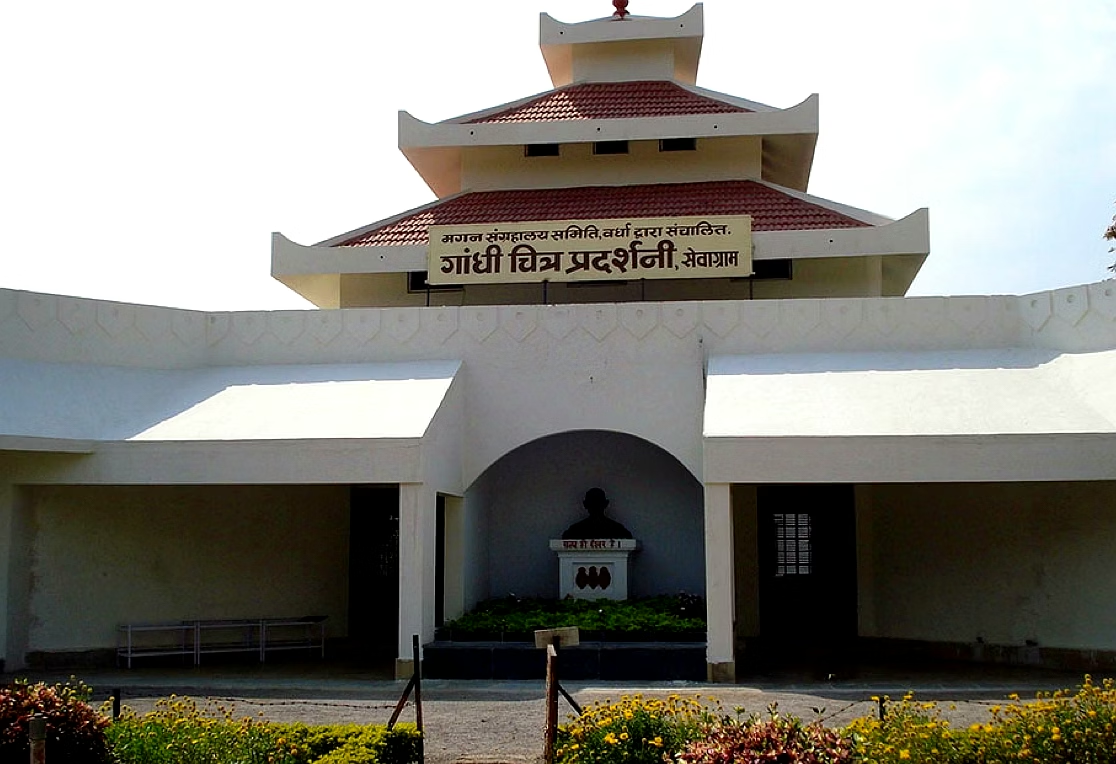
Magan Sangrahalaya, Wardha
A Historical Museum Founded by Mahatma Gandhi (1938)
Magan Sangrahalaya is a historical museum in Wardha, Maharashtra, dedicated to the artisans and craftsmen of India. It is known as the only museum in India founded by Mahatma Gandhi in 1938, created to present a living picture of Khadi and Village Industries—traditional knowledge, improved equipment, production methods, and finished products— all under one roof.
The museum stands as a “single window” into rural industrialization: a place where visitors can understand how village-based production can support self-reliance, dignity of labour, and livelihood opportunities for the poor and marginalized. It is not only a collection of objects, but also a practical learning space linked to research, demonstration, and extension activities.
A Short History
After the Dandi March period, Gandhi had taken a vow not to return to Sabarmati Ashram until Swaraj was attained. He needed a place to stay and guide the Indian masses in the continued struggle and constructive work. Shri Jamnalal Bajaj invited Gandhiji to Wardha, and Gandhiji accepted the invitation. Jamnalal Bajaj donated a garden with a couple of buildings where Gandhiji began living. These premises later came to be known as Maganwadi.
During this period, the All India Village Industries Association (AIVIA) was formed. Soon after, the idea of a centre to exhibit products and processes of Khadi and Village Industries took shape. The museum and the Maganwadi headquarters were associated with Shri Maganlal Gandhi—Gandhiji’s close associate and a passionate worker in the research and development of Khadi and village industries. Magan Sangrahalaya was formally inaugurated by Mahatma Gandhi on 30 December 1938.
What You Can See at Magan Sangrahalaya
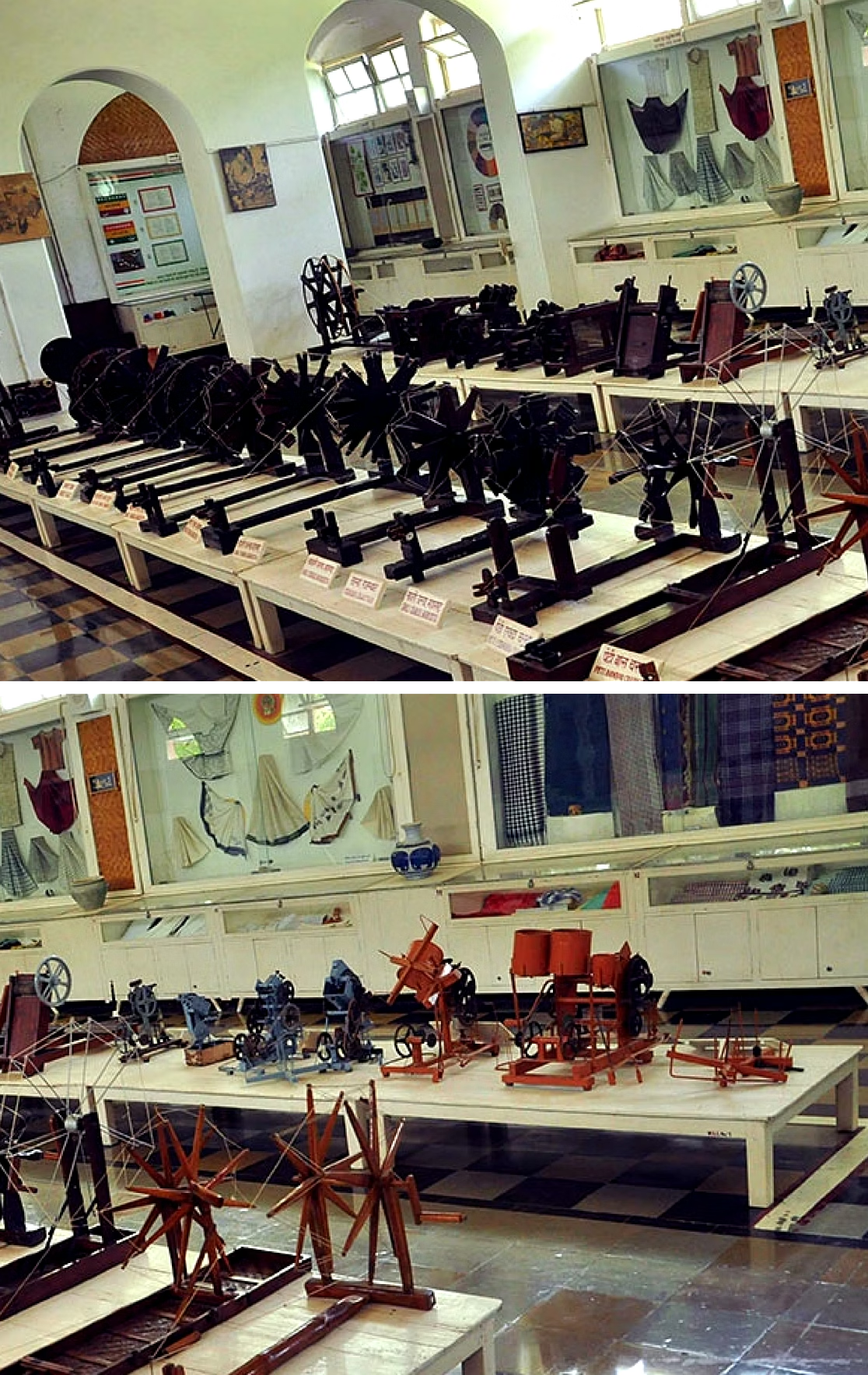
1. Charkhas (Spinning Wheels)
A key attraction is the collection of charkhas dating back to around 1930. Visitors can explore different forms of spinning technology—from hand-operated and pedal-driven charkhas to improved and solar-driven charkhas—showing how innovation can reduce drudgery while protecting traditional skills.
✓ Hand charkhas
✓ Pedal-driven charkhas
✓ Improved and solar-driven charkhas
2. Khadi & Natural Fibre
Textiles
The textile section displays pure khadi, naturally dyed khadi, and khadi blended with other fibres. This highlights the versatility of khadi and the value of natural, skin-friendly, and environmentally responsible materials.
✓ Pure khadi
✓ Naturally dyed khadi
✓ Khadi blends with silk, raw silk, wool, and jute fibres
3. Rural Industries & Low-Cost Technologies
The museum presents over 30 rural industries, offering a broad view of practical village enterprises and technologies. Several displays focus on low-cost, simple methods that rural households can adopt for self-reliance and better living.
✓ Food processing
✓ Agricultural tools for small farmers
✓ Non-violent leather (goods produced from fallen hides)
✓ Handmade paper
✓ Honey extraction
✓ Other low-cost household technologies for rural use

Gandhiji’s Vision: Education + Practical Production
Gandhiji wanted the Sangrahalaya to be a centre of education for the common person—demonstrating evolving techniques in rural industrialization and sharing new models of production.
The core idea was that village industries, when improved with appropriate methods and widely adopted, can generate livelihood and strengthen economic freedom.
Programmes linked to this vision include:
✓ Research, demonstration and extension of khadi and village industries
✓ Agriculture and dairy-related learning
✓ Rural technical education for practical skills and self-employment
Naturopathy Clinic
A naturopathy clinic in the Sangrahalaya helps visitors experience the benefits of natural, ayurvedic and alternative therapies. This reflects the wider Gandhian approach of holistic living—health, simplicity, and harmony with nature.