

Magan Charkha comes to you with impeccable credentials rooted in Gandhian philosophy, rural empowerment, and sustainable development. Our journey is deeply connected to India’s constructive movement — a movement that sought not only political freedom...
- maganorganic@gmail.com
- MAGAN SANGRAHALAYA SAMITI, NEAR MAGANWADI,, , Wardha, Maharashtra, India. 442001
© 2020 Magan Charkha. All Rights Reserved
Farm to Fabric
From Soil to Soul – A Living Textile Journey
Two decades ago, the collapse of the handloom industry caused a major livelihood crisis for weavers and artisans. Many skilled families lost their income and dignity. Magan Sangrahalaya Samiti (MSS) responded by restoring livelihoods and bringing artisans into a Hand Spun Hand-Woven ecosystem based on self-reliance, ethical production, and sustainable rural development.
Today, the MSS Hand Spun Hand-Woven enterprise provides employment to around 300 rural artisans. People engaged in hand spinning, hand weaving, dyeing, processing, printing, tailoring, and marketing are covered under an Artisan Welfare Scheme that supports:
✓ Provident fund benefits
✓ Pension support
✓ Insurance coverage
✓ Scholarships for students

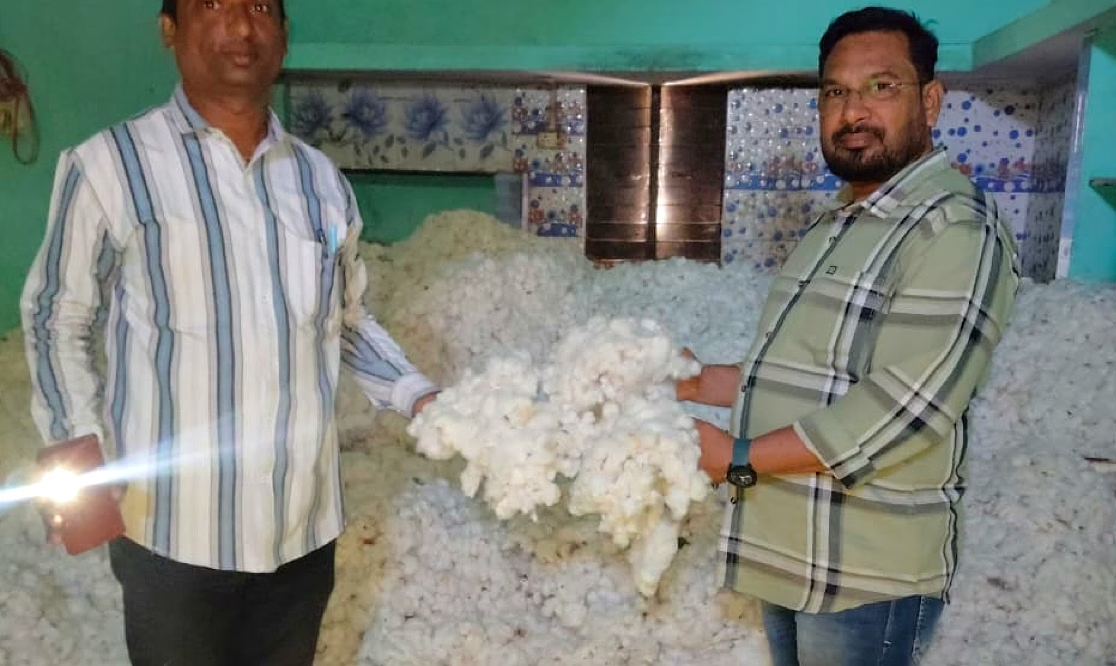
Toxic-Free Cotton Ginning & Storage (Girad Village)
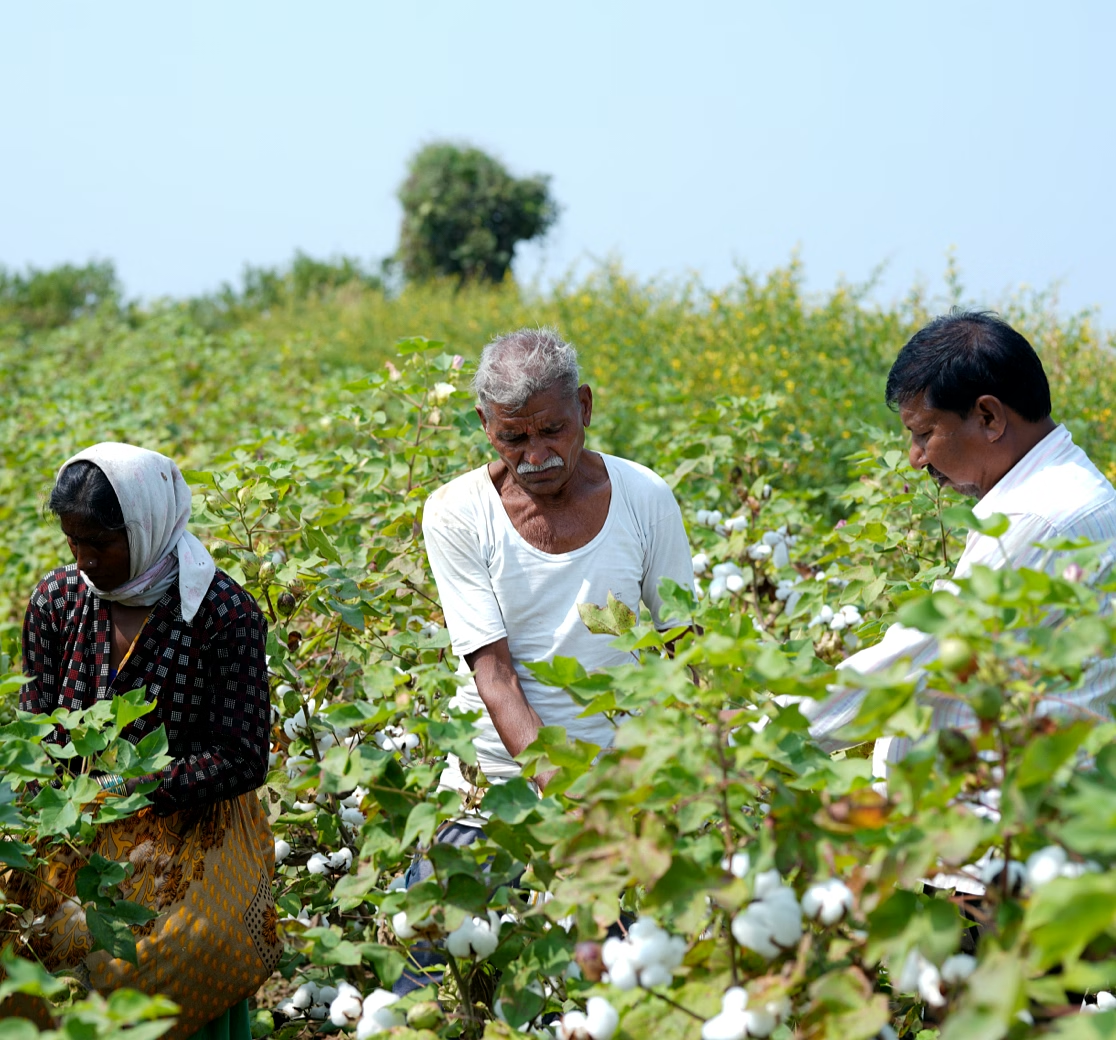
To protect organic farmers from exploitation and strengthen fair value chains, MSS established a cotton collection, storage, and processing unit in the village of Girad. This unit supports farmers by enabling them to deseed cotton and convert raw cotton into transportable bales.
✓ Financial support and processing facilities for 100 farmers
✓ Organic cotton purchased at 20% higher than market rate
✓ Better transparency, storage, and price security for farmers
Hand Spinning Unit (Solar Ambar Charkhas)
To reduce drudgery and increase earnings, MSS replaced hand-operated charkhas with solar-operated Ambar Charkhas. This intervention has doubled production and improved incomes for women spinners. The spinning unit provides employment to rural women, including older and physically handicapped women.
✓ Reduced manual strain
✓ Doubled yarn production and spinner earnings
✓ Inclusive work opportunities for vulnerable women

Hand Weaving Unit
The number of traditional weavers is declining as younger generations move away from the craft. To address this, MSS trains women from farming communities in Hand Spun Hand-Woven weaving.
Weavers from Wardha, Nagpur, Madhya Pradesh, and West Bengal are engaged in weaving and processing Magan fabric.
✓ Training new women weavers to sustain the craft
✓ Engagement of weavers across multiple regions
✓ Support for heritage skills and rural livelihoods
Natural Dyeing & Eco Printing
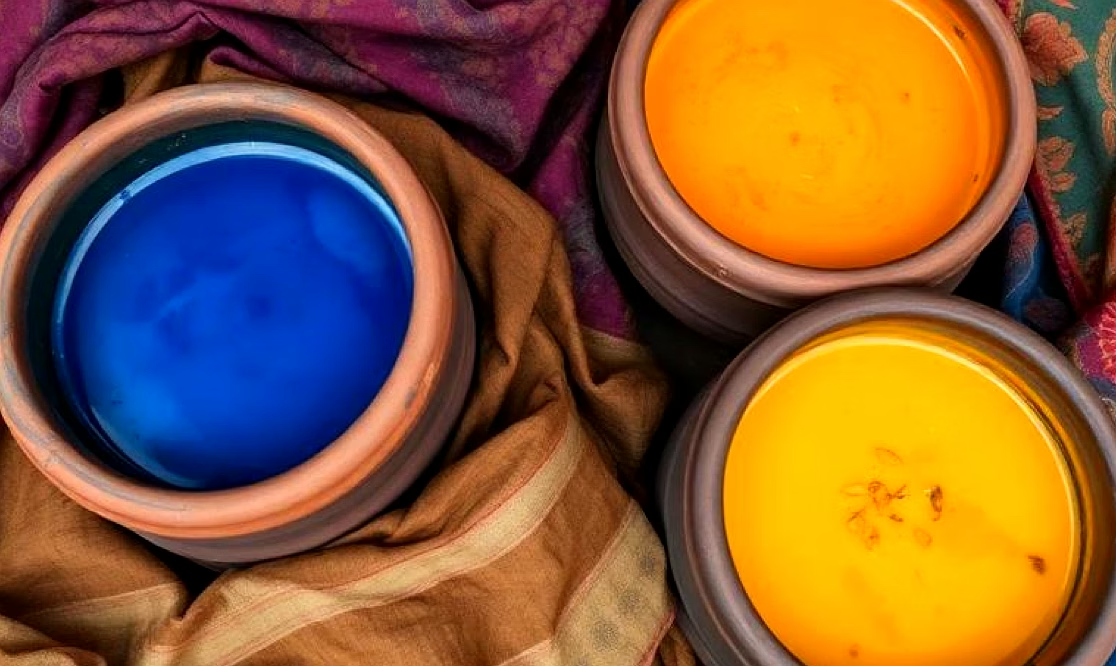
MSS established a Natural Dyeing and Printing unit to avoid the environmental hazards of chemical dyes. Yarn and fabric are processed, dyed, and printed using natural, chemical-free sources such as Indigo and forest produce. Materials used include Harda, Behada, Aam, Palash, Pakpu, Bibba, Amar, Manjishtha, Dhrawri, and more.
Households from five tribal villages earn livelihoods by supplying these raw materials to the natural dyeing unit.
✓ Natural dyes = safer for skin and environment
✓ Tribal households earn by supplying dye materials
✓ Eco printing creates unique botanical impressions

Printing Unit – Innovation for Women Artisans
MSS developed a low-cost printing innovation where a fresh leaf is used as a printing block. From a single leaf, about 200 motifs can be printed. Women artisans are also trained in multiple hand printing techniques.
✓ Leaf block printing (200 motifs from one leaf)
✓ Wood/metal block printing
✓ Kasim line printing and eco-printing
✓ Brush painting and spray printing
✓ Tie & dye and discharge technique
✓ Clay printing and watt printing
✓ Printing on cotton, silk, and wool fabrics
Why Farm to Fabric Matters
Farm to Fabric is not just a process — it is a philosophy of transparent, ethical, and sustainable production. Every meter of fabric carries a story that starts in the cotton field and ends in a breathable, handwoven textile.

Environmental Responsibility
• Minimal carbon footprint
• Low water usage
• Zero toxic discharge
• Biodegradable textiles

Social Impact
• Fair income to farmers
• Employment for spinners and weavers
• Preservation of rural skills
• Women-led livelihoods and training

Textile Excellence
• Breathable and skin-friendly fabric
• Unique texture and natural feel
• Handcrafted quality (no two meters the same)
• Story-driven textiles valued by conscious buyers